
A single water loss can displace residents, interrupt rental income, strain your management team, and expose ownership to claims that continue long after the repairs are complete. This multifamily risk management guide is built for apartment owners and investors who view insurance as part of a larger strategy for protecting property, income, and long-term family wealth.
For California multifamily properties, risk is rarely limited to a fire or a slip-and-fall incident. Wildfire exposure, aging infrastructure, rising reconstruction costs, habitability allegations, vendor oversight, and tenant safety all deserve attention. The goal is not to predict every event. It is to identify where a loss can become financially disruptive and put practical controls and strategic coverage in place before that happens.
Multifamily Risk Management Guide: Start With the Property
Every effective risk program begins with a clear, current picture of the asset. A policy renewal based on outdated building information can leave an owner carrying more risk than expected when a major claim occurs. Review each building’s year built, square footage, construction type, roof age, electrical and plumbing updates, heating systems, amenities, parking areas, and protective features.
Replacement cost deserves particular care. Market value and insurance value are not the same. A building may have a strong market value because of its location and income potential, while its reconstruction cost is driven by labor availability, materials, code requirements, and the complexity of rebuilding an occupied property. Underestimating that cost can create an unwelcome coverage gap after a covered loss.
For older properties, ordinance or law coverage is often part of the conversation. If a covered loss requires damaged areas to be rebuilt to current codes, the cost can extend beyond repairing what was there before. The appropriate limit depends on the building, local requirements, and the severity of a potential loss. It should be reviewed as a deliberate decision, not treated as a minor policy detail.
Prioritize Maintenance That Prevents Severe Losses
Maintenance records are operational tools and valuable evidence of responsible ownership. A documented inspection schedule can help identify issues before they become major claims and demonstrate that the property was actively managed if a dispute arises.
Pay close attention to roofs, drainage, balconies and walkways, handrails, exterior lighting, stairs, fire protection equipment, and common-area surfaces. Inside units, recurring leaks, aging supply lines, electrical concerns, smoke and carbon monoxide alarms, and moisture conditions deserve prompt action. Deferred maintenance may appear manageable until a small condition leads to water damage, mold concerns, injury, or an extended vacancy.
A practical approach is to classify findings by urgency: immediate life-safety concerns, conditions that can cause property damage, and planned capital improvements. This helps owners direct attention where it has the greatest effect while building a defensible maintenance history.
Protect Rental Income, Not Only the Building
Property insurance is essential, but the building itself is only one side of the balance sheet. A serious covered loss can reduce or eliminate rental income while fixed expenses continue. Mortgage obligations, payroll, utilities, taxes, security, and professional services may remain due even when units cannot be occupied.
Loss of rental income coverage, sometimes addressed within business income provisions, should be aligned with the property’s actual revenue and realistic recovery timeline. Restoration of a multifamily building can take longer than anticipated when permits, material lead times, contractor availability, and tenant relocation all affect the process.
The indemnity period matters as much as the limit. A property with substantial income may require a longer recovery period than a straightforward calculation suggests. Owners should also understand whether the coverage responds to the specific circumstances of a covered claim, including the policy terms, waiting periods, and applicable limits.
Consider contingency planning alongside insurance. Keep current rent rolls, vendor contacts, lease documents, maintenance records, photographs, and financial statements in a secure location. Establish who has authority to approve emergency repairs, communicate with residents, and coordinate with insurers and restoration professionals. Good records reduce confusion when fast decisions are required.
Reduce Liability Through Daily Operations
Many multifamily liability claims begin with ordinary conditions: a wet walkway, poor lighting, a broken handrail, an unsecured gate, or a repair request that was not documented and closed out. The most useful liability controls are consistent rather than complicated.
Create a repeatable process for receiving, recording, assigning, and completing maintenance requests. For higher-risk reports, such as water intrusion, suspected gas issues, damaged stairs, electrical hazards, pests, or safety concerns, establish escalation procedures and response expectations. Clear documentation should show when the concern was reported, what was observed, what steps were taken, and when the work was completed.
Vendor management is equally important. Contractors should be properly licensed for their work and carry insurance appropriate to the job. Depending on the work and contract, ownership may need to be named as an additional insured and may request a written agreement that addresses indemnification and insurance requirements. A certificate alone does not tell the whole story, so owners should review requirements with experienced counsel and insurance advisors when the work is significant.
Security decisions require judgment. Cameras, gates, lighting, controlled access, and on-site staff may reduce certain exposures, but each property has different needs. Once a security measure is represented to residents or installed, it must be maintained and managed responsibly. Avoid making promises that property operations cannot consistently support.
Address California-Specific Catastrophe Exposures
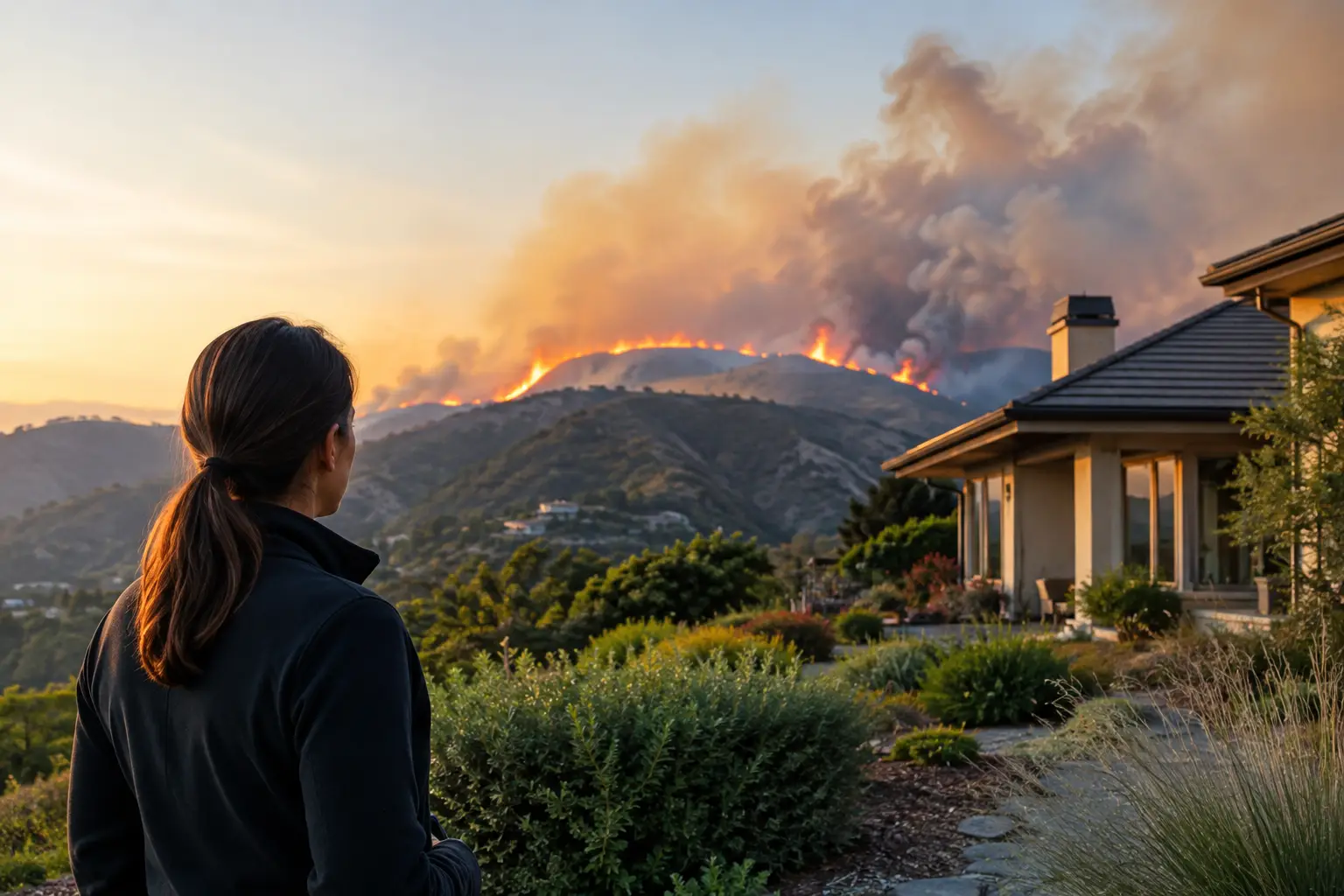
California owners face property risks that standard policies may handle differently or exclude altogether. Wildfire, earthquake, flood, and wind-driven rain require careful evaluation based on the property’s location, construction, surrounding terrain, and loss history.
A property in a high-risk fire area may require specialized placement, mitigation information, and a more involved underwriting process. Vegetation management, defensible space where applicable, accessible addresses, maintained roofing, and clear fire department access can support safety and improve the quality of the risk presented to insurers. These measures do not guarantee coverage or prevent every loss, but they demonstrate thoughtful stewardship.
Earthquake and flood are separate discussions for many owners. An earthquake can damage foundations, utilities, interior finishes, and building systems without causing a traditional fire loss. Flood risk can exist outside a widely recognized flood zone because drainage failures, intense storms, and local topography can direct water toward a property. The right strategy depends on the asset and the owner’s ability to retain a significant uninsured loss.
Review Habitability and Tenant Communication Practices
Habitability-related allegations can arise when residents believe a condition affected their health, safety, or use of the unit. Water intrusion, mold concerns, heat or cooling issues, pest activity, sanitation problems, and delayed repairs can develop into disputes if communication is inconsistent.
Owners and managers should use written protocols for resident notices, access requests, emergency response, temporary accommodations, and repair updates. The objective is not merely to create paperwork. It is to keep residents informed, coordinate repairs with care, and create an accurate record of the property’s response.
Lease language, house rules, and resident communications should be reviewed periodically with qualified legal professionals. Insurance can support defense and covered liability claims under the terms of a policy, but it is not a substitute for compliant operations, timely repairs, or sound legal guidance.
Build Coverage Around the Actual Ownership Structure
Multifamily ownership is often more complex than a single named insured. Properties may be held in separate entities, financed by different lenders, managed by affiliated companies, or owned through partnerships and family investment structures. A coverage review should confirm that the named insureds, additional insureds, mortgagees, and property schedules accurately reflect the current arrangement.
General liability, commercial property, umbrella liability, workers compensation for employees, commercial auto for company vehicles, and cyber liability for sensitive tenant or payment information may all have a place in a broader protection plan. The right combination depends on how the property is operated. A self-managed portfolio has different exposures than a building run by a third-party manager, and a property with extensive amenities may need a different liability discussion than a smaller, straightforward asset.
Deductibles also deserve a business-level decision. A higher deductible can make sense for an owner with strong liquidity and a disciplined loss-control program. It can be less suitable when a regional event could affect multiple locations at once. Consider not only what the entity can absorb for one loss, but also what it could absorb if several losses occur during the same period.
A thoughtful annual review brings these pieces together. Before renewal, revisit capital improvements, occupancy, rents, payroll, claims, vendor relationships, catastrophe exposure, and changes in ownership or financing. Koda Insurance Services approaches this conversation as a long-term advisory relationship, helping owners make coverage decisions that support their assets and the people who depend on them.
The strongest protection is built before an emergency call, a resident complaint, or a lender request puts pressure on the decision. Give your multifamily portfolio the same disciplined attention you give acquisitions and capital planning. That is how risk management becomes a source of lasting peace of mind.