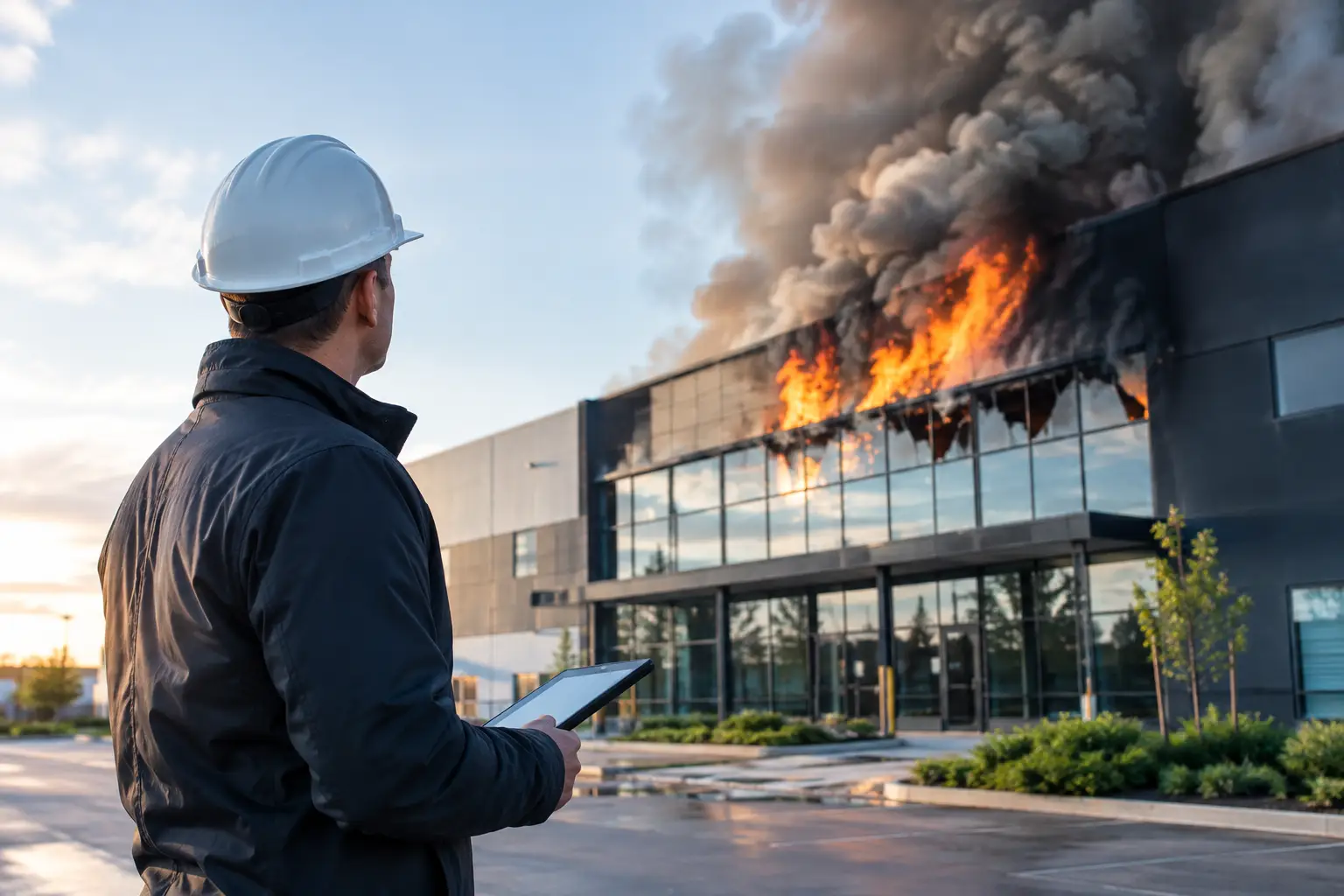

A warehouse lease can shift responsibilities, but it does not shift away the owner’s financial exposure. Knowing how to insure leased warehouses starts with separating what the landlord owns from what the tenant operates. The building may be leased to a stable distributor, manufacturer, logistics company, or contractor, yet a major fire, roof loss, premises injury, or prolonged shutdown can still threaten the property’s value and income.
For California warehouse owners, insurance should support the lease, protect the structure, and preserve expected rental income after a covered loss. That requires more than selecting a standard property policy. It requires a thoughtful review of the building, the tenant’s use, local hazards, lease obligations, and the coverage gaps that can emerge when ownership and operations are handled by different parties.
How to Insure Leased Warehouses as the Building Owner
A leased warehouse is generally insured through a landlord-focused commercial property and liability program, often referred to as Lessor’s Risk Only coverage. This approach is designed for owners who lease space but do not conduct the tenant’s day-to-day operations.
The owner’s policy should protect the physical building, attached structures, permanently installed improvements, and the income the property produces. It should also address the owner’s liability for premises-related claims. The tenant, meanwhile, should insure its inventory, equipment, business personal property, employee exposures, and operational liability.
That distinction matters. If a tenant’s stored goods are damaged in a fire, the landlord’s building policy is not intended to replace those goods. If the building’s roof is damaged by wind, fire, or another covered cause of loss, the tenant’s business policy is not intended to rebuild the landlord’s structure. Clear insurance responsibilities are a fundamental part of sound commercial real estate management.
Start With the Lease, Not the Insurance Application
The lease is the roadmap for risk allocation. Before coverage is placed or renewed, review the insurance section with your broker, property manager, and legal counsel as appropriate. The lease should clearly identify who insures the building, tenant improvements, inventory, equipment, and loss of rental income.
It should also establish the tenant’s minimum insurance requirements. In many warehouse leases, owners require the tenant to carry commercial general liability coverage, name the owner and property manager as additional insureds where appropriate, and provide certificates of insurance before occupancy. Depending on the operation, the lease may also require commercial auto, workers compensation, pollution liability, cyber liability, or specialized coverage for hazardous materials.
A certificate alone is not always enough. It is wise to verify policy limits, effective dates, named insureds, exclusions, and the specific additional insured wording requested by the lease. Coverage can lapse, change, or fail to match the tenant’s actual operations. A disciplined annual review can prevent an avoidable dispute after a loss.
Core Coverage for a Leased Warehouse
A tailored warehouse insurance program typically begins with commercial property insurance and premises liability coverage. The appropriate limits and endorsements depend on the property’s construction, location, occupancy, lease structure, and replacement cost.
Commercial Property Coverage
Commercial property insurance helps pay to repair or rebuild the warehouse after a covered loss. It may include the main building, loading docks, offices, exterior lighting, fencing, gates, built-in fire suppression systems, and other scheduled structures.
The building limit should be based on current replacement cost, not market value or the original construction cost. Those figures can differ dramatically. Construction labor, material availability, code changes, and the specialized nature of industrial buildings can make underinsurance especially painful after a major loss.
Owners should also examine valuation terms. Replacement cost coverage is generally different from actual cash value coverage, which may reduce a claim payment for depreciation. Coinsurance provisions, deductibles, and margin clauses also deserve close attention. A policy that appears sufficient at first glance can still leave a shortfall if the property is undervalued or subject to restrictive terms.
Business Income and Rental Value Protection
A building claim rarely ends when the physical repairs begin. If a covered fire or other loss makes the warehouse unusable, the owner may lose months of rental income while reconstruction is underway.
Business income or rental value coverage can help replace lost rents and support certain continuing expenses during the restoration period. This protection is especially significant for investors whose debt service, taxes, maintenance obligations, and portfolio cash flow depend on steady lease revenue.
The restoration period should reflect the real-world time required to rebuild an industrial property in California. Permitting, engineering, debris removal, material delays, lender requirements, and local building code compliance can extend a project well beyond initial expectations. A short coverage period can create a difficult gap just when the property needs support most.
Premises Liability Coverage
General liability coverage for the property owner addresses claims alleging bodily injury or property damage connected to the premises. Examples may include a visitor injured in a poorly maintained parking area, a delivery driver harmed by a hazardous condition at the loading dock, or damage arising from a structural issue the owner was responsible for repairing.
Liability limits should reflect the building’s activity level and risk profile. A warehouse serving frequent truck traffic, public access, multiple tenants, or industrial users may present a different exposure than a single-tenant storage facility with limited daily activity. Excess or umbrella liability coverage can be an important part of protecting a larger real estate portfolio.
Match Coverage to the Tenant’s Actual Use
Two warehouses with identical square footage can require very different risk management strategies. The deciding factor is often the tenant’s operations.
A facility used for ordinary dry storage may present a relatively straightforward occupancy. A site used for food distribution, battery storage, woodworking, auto parts, cannabis-related operations, flammable liquids, chemical storage, or light manufacturing can create materially different fire, liability, and environmental exposures. A tenant may also install racking, refrigeration, compressors, conveyor systems, or other improvements that change the risk after the original policy was issued.
Owners should avoid relying solely on a broad label such as “warehouse.” Ask what is stored, how it is stored, whether the public visits the site, whether trucks or forklifts operate there, and whether the tenant has changed operations since move-in. These details affect underwriting, tenant insurance requirements, safety expectations, and the availability of specialized coverage.
If the property is vacant between tenants, notify your insurance advisor promptly. Vacancy can narrow coverage or create conditions that affect a claim. A planned transition period may call for added inspections, utility management, security measures, and temporary vacancy protection.
California Risks That Need Separate Attention
California warehouse owners often face exposures that are not fully addressed by a standard property policy. Earthquake and flood are common examples. These events may require separate coverage or endorsements, and the decision should be based on the building’s location, construction, financial resilience, lender requirements, and concentration of assets.
Wildfire risk also deserves careful review, particularly for properties near wildland areas or locations affected by brush, wind, and limited fire protection access. Even a warehouse outside a high-risk zone can be affected by smoke, utility interruptions, evacuation orders, or regional supply-chain disruption.
Ordinance or law coverage is another important consideration. After a significant loss, local codes may require demolition of undamaged portions, upgrades to electrical systems, accessibility features, sprinklers, roofing, or other building components. Basic property limits may not fully absorb those added costs. For older industrial buildings, this coverage can be central to a realistic rebuilding plan.
Build a Strong Insurance File Before a Claim
Good coverage performs best when the owner can document the property clearly. Maintain current building valuations, lease agreements, tenant certificates, inspection reports, maintenance records, photographs, and a record of major improvements. These materials help support underwriting, streamline renewal discussions, and make a future claim easier to present.
It is also helpful to review the policy after meaningful changes: a new tenant, expanded operations, a building addition, a major roof project, a revised lease, or a change in occupancy. Insurance should evolve with the asset, not remain frozen at the terms selected years ago.
At Koda Insurance Services, we view warehouse coverage as part of a wider strategy for safeguarding real estate assets, income, and long-term financial security. The right approach is not a one-size-fits-all policy. It is a coordinated plan that recognizes your building’s value, your tenant’s operations, and the responsibilities written into the lease.
A careful annual conversation with a trusted insurance advisor can turn a warehouse policy from a document kept in a file into meaningful protection for the property and the people who depend on it.