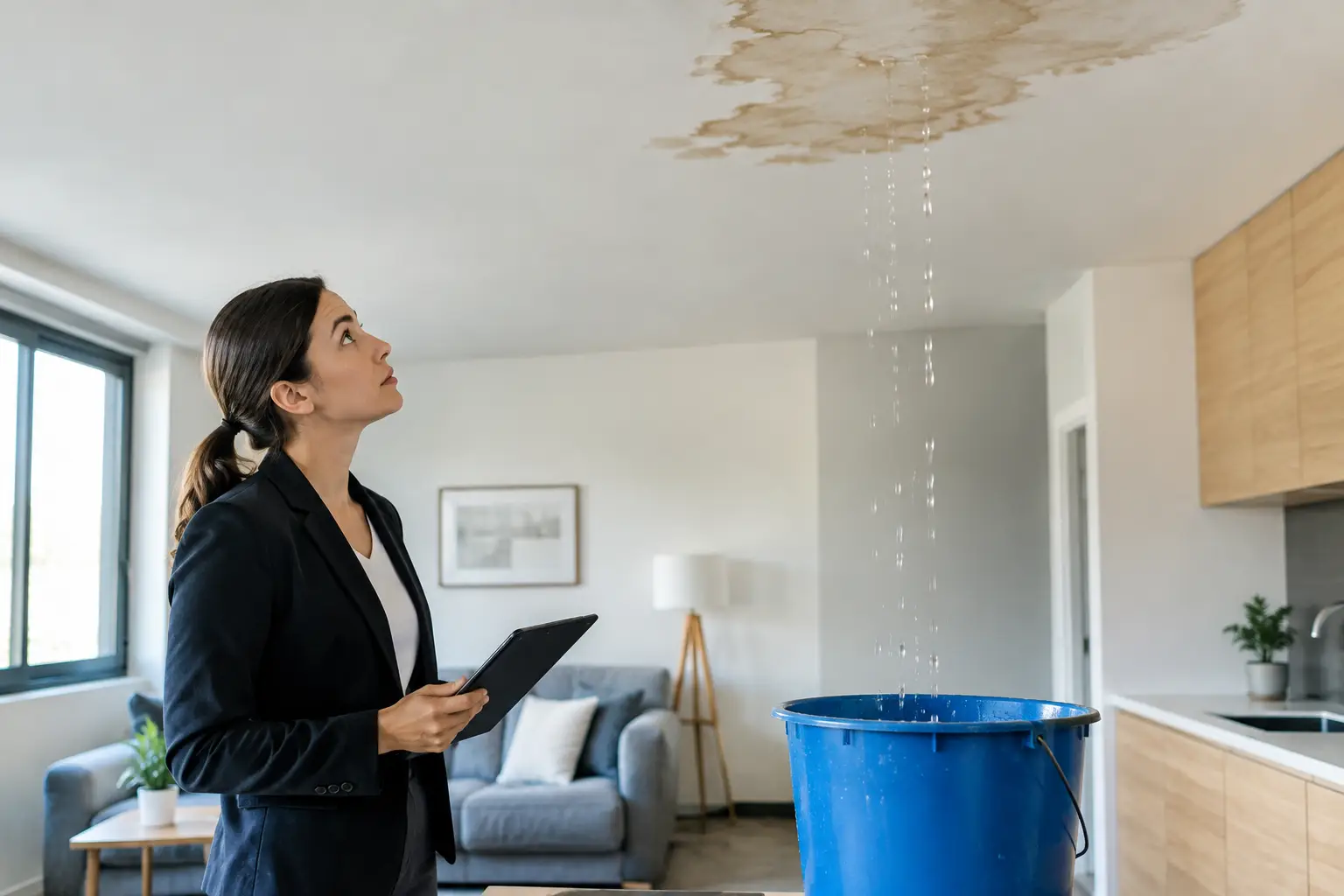
At 2:15 a.m., a failed supply line behind a third-floor bathroom wall can turn a well-performing apartment property into an urgent business continuity event. Water does not stay within the unit where it starts. It follows framing, electrical pathways, and gravity, often affecting ceilings, finishes, personal property, and tenant confidence several floors below.
This apartment water damage case study examines a realistic multifamily loss scenario and the insurance decisions that shaped the recovery. The lesson for California owners is not simply to carry property insurance. It is to understand how building values, income exposure, tenant obligations, and policy terms work together before an emergency puts them to the test.
The Loss Scenario
Consider a 48-unit garden-style apartment community in Southern California. The property had stable occupancy, recently updated common areas, and a mix of long-term and newer residents. On a weekend night, a pressurized water line serving a third-floor unit failed inside a wall cavity.
The resident quickly reported water coming through a light fixture, but by the time emergency mitigation began, water had traveled into six units. Three apartments sustained major ceiling, flooring, and drywall damage. Two lower-level units required temporary relocation while affected materials were removed, dried, and replaced. A corridor ceiling and part of the electrical system also required inspection and repair.
The immediate repair bill was substantial. But the owner’s larger concern was operational: how to protect residents, preserve rental income, manage vendors, document the event, and avoid a longer vacancy cycle after construction.
What Made This Loss More Complicated
A water loss is rarely just a plumbing repair. In this case, the owner faced several connected exposures: emergency water extraction, mold-prevention measures, restoration of damaged finishes, potential code-related improvements, lost rental income, and resident complaints about habitability and damaged belongings.
The source of the water also mattered. A sudden and accidental discharge from a plumbing system is treated very differently from water entering through a flood, repeated seepage, poor maintenance, or a sewer backup. Policy language, endorsements, and the facts documented during the investigation determine whether and how coverage may respond.
Apartment Water Damage Case Study: The Response That Protected the Property
The management team’s first decision was the right one: stop the source and begin professional mitigation immediately. They shut off water to the affected line, contacted a qualified emergency restoration contractor, and documented conditions before demolition began. Photos, videos, maintenance records, resident reports, and invoices created a reliable timeline of the loss.
The owner also notified the insurance carrier promptly and assigned one person from management to coordinate communications. That prevented conflicting updates to residents, contractors, and the claims representative. A single point of contact does not remove the owner’s responsibility to stay engaged, but it keeps a complicated loss organized.
Temporary relocation was handled with care. Residents received clear instructions about access, repairs, and expected timelines, while the management team tracked each unit’s rent status and relocation-related expenses. This approach reduced confusion at a moment when residents understandably wanted answers.
Within days, the claim team, mitigation contractor, and property manager had established a scope for drying, demolition, and reconstruction. The project still required adjustments as concealed damage became visible, but the early documentation helped support those conversations.
Where Coverage Made a Meaningful Difference
The property’s commercial habitational policy included building coverage and loss of rental income protection following a covered physical loss. Those two components worked together: property coverage addressed eligible repair costs, while income protection helped address rents the owner could not collect from units made uninhabitable by the covered event.
That distinction is critical. Replacing drywall and flooring may restore the building, but it does not automatically restore the income interrupted during repairs. For apartment owners, lost rents can become a material financial strain even when the physical damage is manageable.
The policy was also structured with a replacement cost approach appropriate for the asset. This matters because repairing a multifamily building at current material and labor costs can be far more expensive than an older valuation suggests. Underinsurance can leave an owner participating in a loss well beyond the deductible, particularly when policy terms include coinsurance requirements.
Liability coverage also remained an essential part of the risk-management picture. Although not every resident inconvenience becomes a claim, allegations of property damage, bodily injury, or failure to maintain habitable conditions can arise after a water event. General liability coverage can help provide a defense for covered allegations, subject to the policy’s terms, exclusions, and limits.
The Coverage Questions the Owner Had Already Addressed
Before the loss, the owner had reviewed several areas that often create unwelcome surprises. The policy reflected the property’s rebuilding exposure, included a meaningful loss-of-income limit, and accounted for applicable deductibles. The owner also understood that resident belongings are generally the residents’ responsibility and encouraged tenants to maintain their own renters insurance.
Just as important, the owner did not assume every form of water damage was interchangeable. Flood damage typically requires separate protection. Sewer or drain backup may be subject to a separate endorsement or sublimit. Long-term leakage, deferred maintenance, and mold-related damage may have limited or excluded coverage depending on the policy and the circumstances.
Insurance is designed to respond to covered events, not replace preventive maintenance. That is why a claims conversation should always be paired with a property-management conversation about inspections, aging plumbing, shutoff valves, roof drainage, and vendor accountability.
What the Owner Would Do Differently Next Time
The loss revealed an operational gap rather than a coverage failure. The building had water shutoff information, but it was not immediately accessible to every after-hours team member. After the incident, management created a simple emergency response protocol with the location of shutoff valves, emergency vendor contacts, escalation procedures, and resident communication templates.
The owner also initiated a broader review of supply lines in units with similar plumbing components. Replacing every component at once may not be necessary for every property. It depends on the age of the building, prior maintenance history, water pressure, construction type, and the condition identified by a qualified plumber. Still, targeted preventive work can be far less disruptive than a multi-unit restoration project.
Finally, the experience reinforced the value of annual insurance reviews. Construction costs, rental income, renovations, occupancy changes, and local code requirements can all change the risk profile of an apartment community. Coverage that was suitable several years ago may not reflect the property’s current exposure.
A Practical Framework for Apartment Owners
A strong response begins long before water appears on a ceiling. Owners and property managers should know who can authorize emergency mitigation, where building shutoffs are located, and how to reach qualified restoration vendors after hours. They should also preserve maintenance records and inspect vulnerable systems before they fail.
From an insurance perspective, review the building limit, deductible structure, loss-of-rents protection, ordinance or law coverage, general liability limits, and any water backup endorsements. The right structure depends on the property, but a tailored review helps identify whether a limit, endorsement, or valuation assumption no longer fits the asset.
For California apartment owners, this review is particularly valuable when renovation costs and local building requirements have changed. A repair may trigger code-related work that expands the scope beyond restoring exactly what existed before. Ordinance or law coverage can be a meaningful consideration in those circumstances, subject to the policy’s provisions.
Protection Is Built Before the Claim
The most valuable outcome of this apartment water damage case study is not a perfect claim process. No owner wants to test their coverage during an overnight emergency. The value is having a thoughtful plan, responsive property management, and strategic coverage already aligned with the property’s real financial exposure.
At Koda Insurance Services, we believe apartment protection should support both the building and the people who depend on it. A careful insurance review can help you move from reacting to losses toward safeguarding your income, residents, and long-term investment with greater confidence.