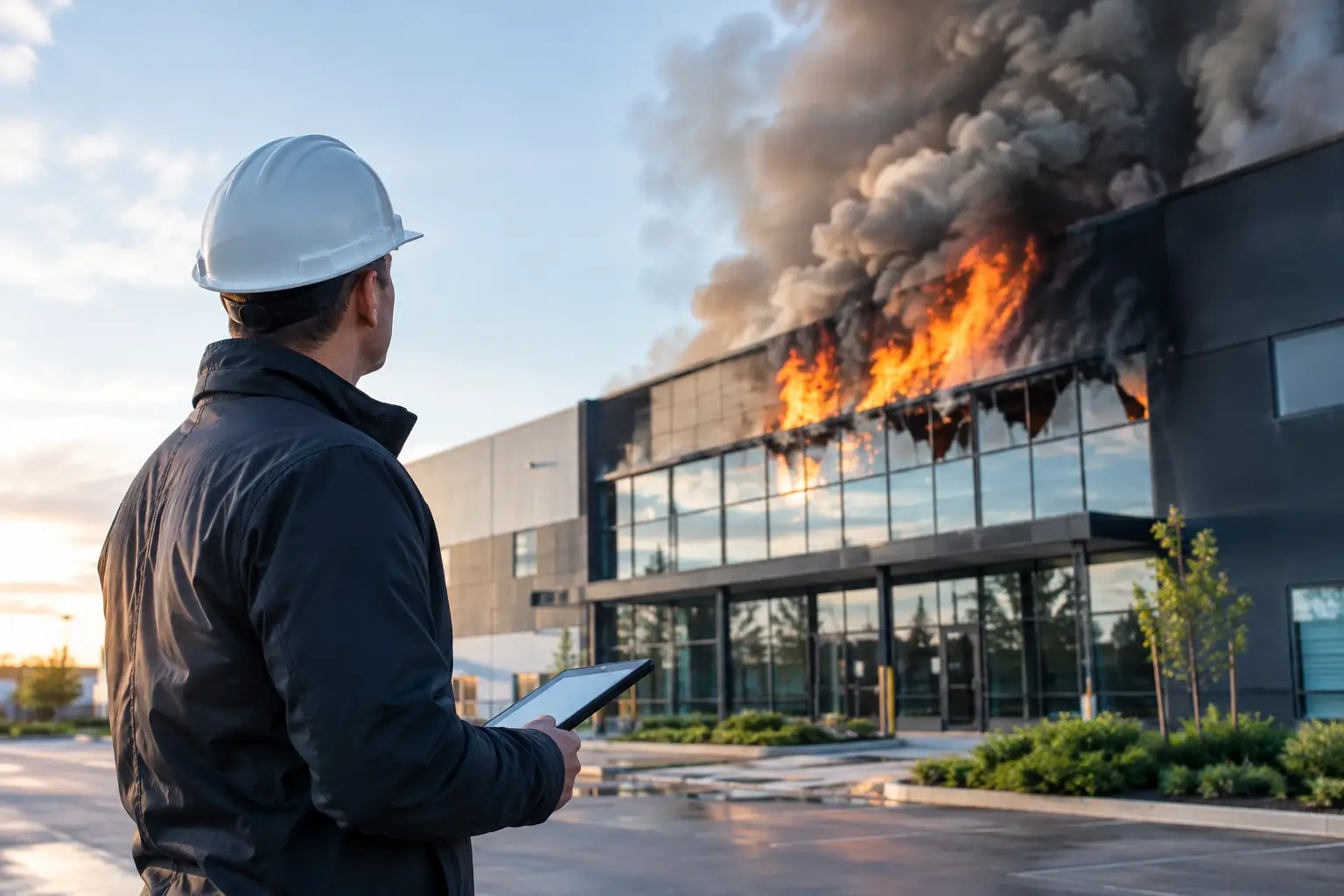
A fire at a commercial building is not only a property loss. For a landlord, investor, or business owner, it can interrupt rental income, displace tenants, create safety obligations, delay financing, and put long-standing business relationships under strain. Fire claims require more than a quick call to an insurer. They require organized records, clear communication, and coverage designed for the actual value and use of the property.
For California property owners, the stakes can be especially high. Rebuilding costs, local code requirements, wildfire exposure, limited contractor availability, and the needs of commercial tenants can all affect the path forward. The right preparation helps protect what matters most: your asset, your income, and your ability to move forward with confidence.
Why Fire Claims Are More Complex Than They Appear
The visible damage from fire is only the beginning. Smoke can travel through HVAC systems and adjoining suites. Water used to suppress the fire may damage flooring, electrical systems, inventory, equipment, and tenant improvements. A structure that looks intact from the street may still require extensive remediation before it is safe to occupy.
For commercial landlords, a loss can also create competing responsibilities. The building owner may be responsible for repairing the structure and restoring common systems, while tenants handle their own inventory, furniture, equipment, and business personal property. Lease language matters, as do the policy endorsements that address additional insureds, mortgage holders, loss payees, and contractual obligations.
The insurance claim itself may involve several separate areas of coverage. Property damage, debris removal, business income, extra expense, ordinance or law coverage, and liability allegations do not always move on the same timeline. A strong claims strategy recognizes that each piece must be documented and managed carefully.
Coverage That Can Shape Fire Claim Recovery
A commercial property policy is designed to address direct physical loss from a covered fire, but the details of coverage determine how effectively a property can be restored. Limits, valuation methods, deductibles, exclusions, and endorsements all matter after a loss. A policy that looks adequate at renewal may prove insufficient if building values or rental income have changed.
Building valuation and replacement cost
Replacement cost coverage is often central to a meaningful recovery because it is intended to help repair or rebuild with materials of like kind and quality, subject to policy terms and limits. However, replacement cost is not the same as a property’s market value. A well-located building may have a market value driven by land and location, while its reconstruction cost is driven by labor, materials, design, permitting, and current building standards.
Underinsurance can create serious pressure during a major loss. Depending on policy terms, a coinsurance provision may reduce a claim payment when the insured value does not reflect the required percentage of replacement cost. Regular valuations are a practical risk-management measure, particularly for apartment complexes, older commercial buildings, and properties that have undergone renovations.
Business income and rental value
For owners of leased commercial or multifamily property, lost rental income can be as consequential as the repair bill. Business income or rental value coverage may help replace covered income lost during the period of restoration. Extra expense coverage may help pay certain necessary costs to reduce the interruption, such as temporary relocation arrangements or expedited repairs, when covered by the policy.
The appropriate limit and restoration period depend on the property. A small office building with readily available contractors may recover differently from a large apartment community, a retail center with multiple tenants, or an industrial property requiring specialized systems. Permit delays, supply constraints, inspections, and tenant build-out requirements can extend the timeline well beyond the initial cleanup.
Ordinance or law coverage
A fire can trigger requirements to bring undamaged portions of a building into compliance with current codes. This is particularly relevant for older properties in California, where rebuilding may involve upgrades to electrical systems, fire suppression, accessibility features, roofing, or energy standards.
Standard property coverage may not fully address these increased costs without ordinance or law protection. This coverage can be structured to address loss to the undamaged portion of a building, demolition costs, and the increased cost of construction. The right amount depends on the building’s age, occupancy, location, and local requirements.
Liability exposure after a fire
A fire can lead to allegations that extend beyond property damage. Tenants, visitors, neighboring owners, or employees may claim injury, smoke damage, loss of use, or negligence related to maintenance, security, or the condition of the premises. General liability coverage and legal defense can be essential, but the facts of the incident, lease provisions, and policy terms will guide the response.
Property owners should avoid making assumptions about fault or agreeing to pay for damages before consulting their insurer and counsel when appropriate. Compassion and cooperation matter, but a measured response helps preserve the integrity of the claim.
What to Do in the First Hours After a Fire
Once emergency services have cleared the site, the first priority is preventing further injury and additional damage. Secure the property, restrict access to authorized personnel, and preserve evidence. Do not begin demolition or dispose of damaged materials until the insurer has had an opportunity to inspect, unless immediate action is necessary to protect people or prevent further loss.
Notify your carrier and insurance advisor promptly. Provide the basic facts known at the time, including the location, date, affected areas, emergency contacts, and any immediate mitigation steps underway. Your claims team can help coordinate the initial response and clarify what documentation will be needed.
Photograph and video the property thoroughly before major cleanup begins. Capture exterior conditions, each affected room, damaged systems, tenant areas, equipment, and visible smoke or water damage. Keep copies of fire reports, incident numbers, vendor invoices, emergency mitigation contracts, and all communications related to the loss.
It is also wise to notify tenants quickly with information that is accurate and practical. Explain access restrictions, safety instructions, and the expected communication process. Do not promise reopening dates before contractors, inspectors, and adjusters have assessed the building. Clear, consistent updates can protect tenant relationships during an understandably difficult period.
Managing the Claim With Discipline
A large fire loss can involve adjusters, restoration contractors, engineers, accountants, public authorities, lenders, property managers, and legal advisors. Assign one internal point person to organize communications and maintain a claim file. This creates a reliable record and reduces the risk of overlooked invoices, duplicate work, or conflicting information.
Track every expense connected to the incident. That includes emergency board-up, water extraction, security, temporary utilities, debris removal, professional fees, and costs related to maintaining operations or tenant communications. Keep a separate record of lost rents, vacancies attributable to the loss, and lease concessions that may be relevant to the business-income portion of the claim.
Review the insurer’s scope of loss carefully. The initial estimate may not capture concealed smoke damage, electrical issues, code upgrades, or the full cost of restoring specialized finishes and systems. If there is a meaningful disagreement, a qualified contractor, engineer, or construction consultant may provide valuable documentation. The goal is not conflict for its own sake. It is a complete, supportable understanding of what restoration requires.
Mortgage lenders may also have a role in the process. When a lender is named on the policy, claim funds may be issued jointly and released in stages as repairs progress. Understanding this process early helps avoid unnecessary construction delays.
Preparing Before a Fire Happens
The strongest time to improve a fire claim is before one occurs. Maintain current building valuations, store policy documents and leases securely off-site, and keep a detailed inventory of building systems, renovations, and capital improvements. For multifamily and commercial properties, updated site plans, utility shutoff information, vendor contacts, and emergency procedures can make the first day after a loss far more manageable.
Annual insurance reviews should account for changing replacement costs, increased rental income, tenant mix, vacancy, and physical improvements. Properties near wildfire-prone areas may also need specialized fire coverage or a broader strategy for managing difficult market conditions. No two buildings carry the same exposure, which is why tailored solutions are more valuable than a one-size-fits-all policy.
Koda Insurance Services helps California property owners evaluate the coverage details that can shape a difficult recovery. We treat every client like family, bringing local perspective and strategic coverage guidance to significant property decisions.
A fire can disrupt a building, but it does not have to define its future. Keep your records current, know who to call, and make sure your protection reflects the property and income you have worked hard to build. When the unexpected happens, thoughtful preparation gives you a steadier path back.